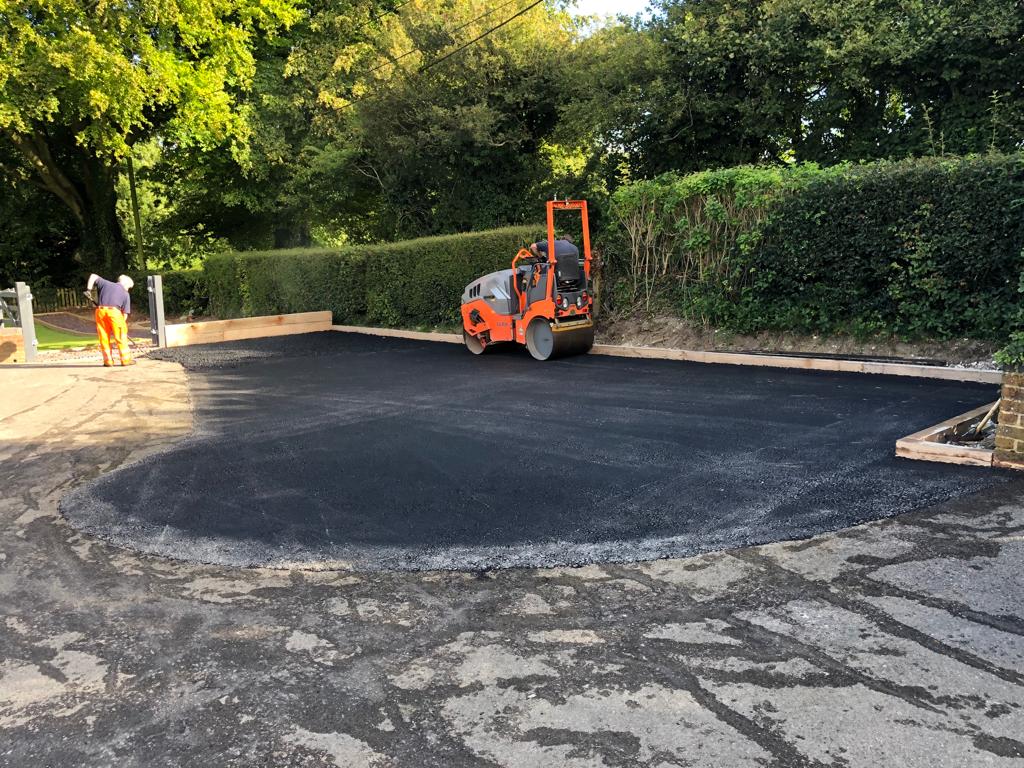
Heavy machinery places very different demands on a surface compared with ordinary passenger vehicles. Excavators, loaders, agricultural machinery, trucks and other heavy equipment can create substantial concentrated loads, particularly when vehicles are parked for extended periods, turning repeatedly or operating within the same working area. A surface that has not been constructed for these demands can begin rutting, sinking or breaking apart.
For properties and operational sites in Young, NSW, a purpose-built hardstand provides a stable area designed around how heavy machinery will actually use the site. Rather than treating the visible asphalt or bitumen layer as the only important element, professional hardstand construction considers the ground underneath, pavement depth, base materials, compaction, drainage and expected vehicle loading.
What Is a Purpose-Built Hardstand?
A hardstand is a constructed pavement intended to provide a firm, durable surface for activities such as machinery parking, vehicle movements, loading, storage and general operational use.
The term “purpose-built” is important. A hardstand intended for occasional light vehicles does not necessarily require the same pavement structure as an area regularly carrying heavy machinery.
Before construction begins, consideration should be given to:
- Types of machinery using the area
- Frequency of vehicle movements
- Stationary equipment loads
- Turning and manoeuvring areas
- Expected wheel loads
- Existing ground conditions
- Drainage requirements
- Intended use of different parts of the site
These factors help determine how the hardstand should be prepared and constructed.
Heavy Machinery Creates Concentrated Loads
Heavy equipment does not simply weigh more than a passenger vehicle. The way that weight is transferred into the pavement also matters.
Tyres or tracks can concentrate significant loads into relatively small areas. When machinery repeatedly travels along the same routes or remains parked in one position, the pavement underneath must resist deformation.
If the supporting layers are inadequate, the surface can gradually sink or develop wheel ruts.
A purpose-built hardstand is constructed to distribute these loads through the pavement structure rather than relying solely on the surface layer for strength.
The Surface Is Only Part of the Hardstand
One of the most important aspects of hardstand construction is what cannot be seen once the project is complete.
Asphalt or bitumen provides the trafficable upper surface, but it relies on stable supporting pavement underneath.
If the base moves excessively under machinery, the surface above can eventually deform or crack regardless of how well it was initially laid.
Professional hardstand construction therefore places significant emphasis on preparing the foundation before the final surface is installed.
Ground Conditions Need to Be Assessed
The existing ground provides the foundation for the complete hardstand.
Before constructing the pavement, the site should be assessed to identify conditions that could affect stability. Soft areas, unsuitable material, uneven formation and sections affected by moisture may require attention.
Ignoring these weaknesses can allow movement to develop underneath the completed pavement.
Where necessary, unsuitable areas should be corrected so the pavement can be constructed over a more consistent foundation.
A Strong Road Base Helps Distribute Machinery Loads
The pavement base is responsible for transferring vehicle loads across a wider area.
A properly prepared base provides a stable platform for the asphalt or bitumen surface while helping resist movement under heavy machinery.
Base construction typically requires suitable materials to be placed, shaped and compacted correctly.
The required pavement structure should reflect the intended use. An area regularly carrying heavy equipment needs to be considered differently from a surface experiencing only occasional light traffic.
Compaction Is Critical to Hardstand Performance
Even suitable pavement materials can perform poorly if they are not properly compacted.
Compaction reduces unwanted movement within the pavement and helps create a dense, stable structure capable of supporting traffic.
Insufficient compaction can contribute to:
- Settlement
- Rutting
- Depressions
- Surface cracking
- Uneven pavement levels
- Water pooling
These problems can become particularly noticeable where heavy machinery repeatedly uses the same sections.
Correct preparation and compaction are therefore fundamental parts of constructing a dependable hardstand.
Turning Machinery Places Additional Stress on the Surface
Straight-line vehicle movements are only one consideration.
Heavy machinery often needs to turn, reverse and manoeuvre within relatively confined areas. These movements can generate additional forces across the pavement surface.
Turning tyres can place considerable stress on the wearing layer, while repeated manoeuvring can expose weaknesses in the pavement underneath.
A purpose-built hardstand should account for where these movements are likely to occur rather than treating the entire site as though traffic travels only in straight lines.
Stationary Machinery Can Be Demanding Too
A machine does not need to be moving to place substantial demands on a pavement.
Heavy equipment parked in the same position for long periods applies continuous concentrated loads to the surface and supporting pavement.
If the structure underneath lacks adequate stability, depressions or settlement can gradually develop.
This is particularly important when planning designated parking, storage or operational areas. Understanding where machinery will regularly stand allows these sections to be considered during pavement design and construction.
Rutting Can Indicate the Pavement Is Struggling
Wheel ruts are a common warning sign that a surface is deforming under traffic.
Shallow surface wear and deep structural rutting are not the same problem. Where depressions become established along regular wheel paths, movement may be occurring within the supporting pavement.
Rutting can also interfere with drainage by creating channels and low points where water collects.
A purpose-built hardstand aims to provide sufficient support to reduce excessive deformation under its expected traffic conditions.
Drainage Is Essential Around Heavy-Duty Pavements
Water can significantly affect hardstand performance if it reaches vulnerable supporting materials.
A strong surface alone cannot compensate for persistent drainage problems.
The hardstand should be shaped so rainfall can move away rather than continually collecting in depressions or flowing into pavement edges.
Important considerations include:
- Surface falls
- Low areas
- Pavement edges
- Direction of runoff
- Existing site drainage
- Areas where machinery may create repeated wheel paths
Good drainage helps protect the pavement structure and reduces conditions that can contribute to premature deterioration.
A Stable Hardstand Can Improve Site Access
A purpose-built hardstand is not only about preventing surface damage.
A consistent pavement can make everyday vehicle movements more predictable by providing a defined area for machinery to travel, park and manoeuvre.
Unprepared surfaces can become uneven, rutted or difficult to use when conditions change. These variations can interfere with routine site operations.
A properly constructed hardstand provides a more consistent working surface designed for the equipment using it.
Hardstands Can Reduce Repeated Surface Maintenance
Where heavy machinery continually travels over an unsuitable surface, repeated grading or local repairs may become necessary as wheel paths, depressions and potholes develop.
A purpose-built hardstand addresses the pavement structure as a whole.
This does not mean the completed surface will never require maintenance. All pavements should be monitored as they age. However, constructing the area for its intended traffic provides a much stronger starting point than repeatedly repairing a surface that was never suited to heavy machinery use.
Why Patching an Inadequate Hardstand May Not Solve the Problem
Potholes and cracks can often be repaired successfully when deterioration remains localised.
Problems arise when defects continually return because the pavement structure itself is inadequate for the loads being placed upon it.
If the base is moving under heavy machinery, repairing only the asphalt above does not remove that movement.
Recurring symptoms can include:
- Potholes returning after repair
- Cracks developing beside patches
- Repeated wheel-path rutting
- Depressions forming in the same locations
- Pavement breaking up around turning areas
Where these problems are widespread, the hardstand may require deeper rehabilitation rather than another surface-only repair.
Existing Hardstands Can Be Assessed for Heavy Machinery Use
Not every site requires a completely new hardstand.
An existing asphalt or bitumen area may already contain pavement that can be retained, strengthened or repaired depending on its condition and intended future use.
A professional assessment can examine:
- Existing pavement stability
- Signs of settlement
- Crack patterns
- Rutting
- Drainage
- Previous repairs
- Edge condition
- Current and proposed machinery movements
This helps establish whether repairs or resurfacing are suitable or whether parts of the pavement need reconstruction.
Resurfacing May Be Suitable When the Foundation Remains Sound
A hardstand can become worn at the surface while retaining a stable underlying pavement.
Where this is the case, resurfacing may provide an appropriate way to renew the trafficable layer.
Significant defects should still be repaired beforehand. The existing pavement must be capable of supporting the new surface and the machinery expected to use it.
Resurfacing should not be used to conceal severe rutting, settlement or widespread structural movement.
When Does a Hardstand Need Reconstruction?
Reconstruction becomes more relevant when deterioration extends into the supporting pavement.
Warning signs can include:
- Deep wheel ruts
- Major settlement
- Extensive interconnected cracking
- Recurring potholes
- Widespread pavement movement
- Repeated failure of previous repairs
- Significant drainage-related deterioration
Affected materials may need to be removed so the underlying pavement can be restored before a new surface is installed.
The entire hardstand does not necessarily need rebuilding if structural failure is confined to particular sections. Professional assessment helps establish the true extent of the problem.
Designing Around Actual Site Use Matters
A dependable hardstand should reflect how the site operates rather than being constructed according to a generic specification.
Contractors need to understand where machinery enters, which routes it follows, where it turns and where equipment will regularly be parked.
Future operational requirements should also be considered where they are known.
This information allows pavement construction to focus on real loading conditions and helps create a hardstand suited to its intended purpose.
Professional Construction Starts Before the Asphalt Is Laid
The quality of a heavy-duty hardstand depends on much more than the appearance of the finished surface.
Site assessment, preparation, pavement materials, grading, compaction and drainage all influence how effectively the hardstand performs.
Once these underlying elements have been correctly addressed, an appropriate asphalt or bitumen surface can complete the pavement.
This complete approach is particularly important for areas carrying heavy machinery because weaknesses beneath the surface can quickly become apparent under substantial loads.
Conclusion
Heavy machinery needs a purpose-built hardstand because concentrated loads, repeated wheel movements, turning forces and stationary equipment can place considerable stress on a pavement. A surface designed primarily for light traffic may begin rutting, cracking or settling when subjected to demands it was not constructed to handle.
A reliable hardstand starts with the foundation. Stable ground, an appropriately constructed base, effective compaction and good drainage are all important before the final asphalt or bitumen surface is installed. Designing the pavement around actual machinery movements also helps ensure the completed area is suited to everyday operational requirements.
Young Road Tek provides professional hardstand, asphalt and bitumen surfacing services throughout Young, NSW. If you require a new hardstand or an existing heavy-use surface is showing signs of rutting, cracking or settlement, our team can assess the site and recommend an appropriate surfacing approach based on the pavement condition and intended machinery use.
Call us on: 02 5926 2530
Click here to find out more about Young Road Tek
Click here to complete our contact form and see how we can help with your Asphalt and Bitumen Surfacing needs.